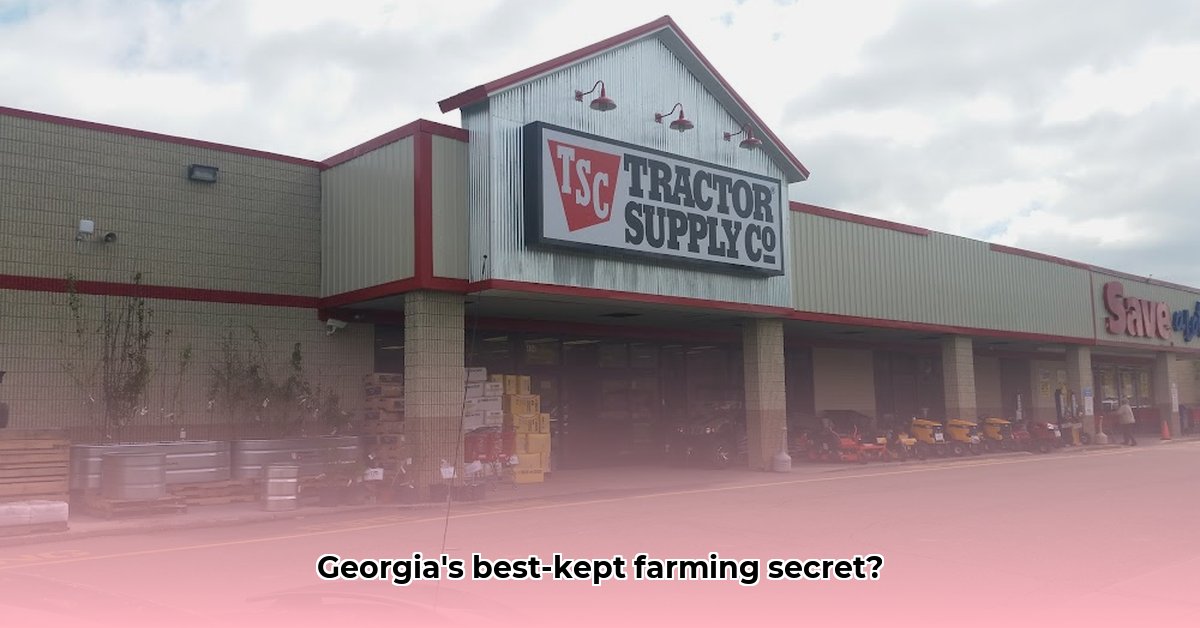
Tractor Supply Bainbridge, Georgia: A Deep Dive into Sustainability
Tractor Supply Company (TSC) in Bainbridge, Georgia, serves as a vital hub for the local agricultural community, providing farmers and gardeners with essential tools and supplies. However, the extent of its contribution to sustainable farming practices remains a critical area for investigation. This article explores TSC's role, examining its product offerings, environmental impact, and community engagement, while highlighting the need for greater transparency and data availability. For further insights into similar businesses, check out this local tractor supplier.
Serving the Community: Assessing TSC's Footprint
TSC's convenience is undeniable; it's a one-stop shop for everything from livestock feed to tractor parts. But its role extends beyond simple provision. Does TSC actively promote or hinder sustainable agriculture? The answer is complex and requires a nuanced investigation. The readily available information, however, is limited, posing a significant challenge to a thorough assessment. For instance, how many of its products are organically sourced? What is the store's energy consumption and waste-management strategy? These questions remain unanswered, requiring further investigation. One could compare this lack of transparency to trying to build a house without a complete set of blueprints—the end result might function but lacks a clear, defined vision.
The Missing Pieces of the Sustainability Puzzle
A significant hurdle in evaluating TSC's sustainability is the lack of publicly available data. We lack concrete metrics on waste generation, energy consumption, and the proportion of sustainable products sold. This opacity hinders a comprehensive evaluation of its environmental impact. This information void is akin to attempting to diagnose a patient's illness without conducting essential tests—conclusions drawn would be purely speculative. To make informed judgments, we need comprehensive data on aspects like supply chain practices—where products originate, transportation methods, and supplier sustainability commitments. This also includes a detailed accounting of their energy usage and waste management protocols.
Uncovering the Truth: Data We Need to Gather
To fully assess TSC’s contribution to sustainable agriculture, we need detailed information. We need a comprehensive sustainability audit. Key areas for investigation include:
- Supply Chain Transparency: Detailed information on the sourcing of products, including the sustainable practices of suppliers. Are they prioritizing sustainable inputs, or are there less sustainable choices prevalent?
- Energy Usage and Emissions: A complete accounting of the store's energy consumption and its carbon footprint. What energy efficiency measures are currently in place?
- Waste Management Strategy: A transparent explanation of the store's waste management practices, including recycling and composting initiatives. What percentage of waste is successfully diverted from landfills?
- Benchmarking Against Competitors: A comparison of TSC's sustainability practices with those of similar businesses to better gauge their performance within the industry. How do they compare to industry best-practices?
These data points are crucial to constructing a fair and accurate assessment of TSC's environmental impact.
A Roadmap to Sustainable Practices: Actionable Steps
Addressing the current data gap necessitates a coordinated effort involving TSC and the wider community. A multi-pronged approach is required:
1. Comprehensive Sustainability Audit (TSC): TSC should conduct a thorough audit of its Bainbridge location, publicly releasing a comprehensive report detailing energy consumption, waste generation, and the percentage of sustainable products sold. This action will demonstrate transparency and accountability.
2. Community Engagement (TSC & Local Stakeholders): TSC should engage with local farmers and consumers through workshops and educational programs, promoting environmentally friendly farming practices. This collaborative approach bolsters community bonds and creates a shared vision for sustainability.
3. Stakeholder Collaboration (Local Government, Agricultural Organizations, TSC) : Joint initiatives between TSC, local government, and agricultural organizations can drive funding and support for sustainable programs. This synergistic partnership ensures a broader impact.
Charting a Sustainable Course: A Collaborative Vision
The journey to a sustainable agricultural future in Bainbridge requires unified action. Transparency from TSC, active participation by local farmers and consumers, and support from the local government are all vital ingredients for success. Even with the current data limitations, initiating these steps fosters progress and strengthens the path toward a greener future.
Key Takeaways:
- TSC's contribution to sustainable agriculture in Bainbridge needs further research and transparency.
- Data scarcity significantly limits our understanding of its environmental impact.
- Collaborative efforts between stakeholders—TSC, local farmers, consumers, and local government—are crucial for achieving sustainability goals.
- Further data collection and analysis are critical for a more accurate evaluation.